
Oats Situation
- Monday, October 13, 2003
This analysis featured in the October 13, 2003 issue of the HGCA's MI Prospect, Volume 6, Number 8
Key points
- North American supplies back to near normal
- More competition from Scandinavia in EU market
- UK prices benefitting from shor EU feed grain supplies
With generally favourable oats' harvests in the three major oats exporting countries, Canada, Sweden and Finland, more normal trade conditions will return to international oats markets this year. UK supplies of oats are, for a second year, large, and will need to be competitively priced. But as generally disappointing EU feed grain harvests have prompted a rally in prices, so prospects for oats are improved.
The US usually accounts for about 75 percent of international oats import trade of rather more than two million tonnes per year. The US milling industry typically imports about 1.1 to 1.2M tonnes of oats from the Canadian prairies into the US Mid West. At the same time Sweden and Finland have more varied US markets for about 0.4M tonnes along the eastern and southern sea boards.
In both 2001 and 2002 the Canadian oat harvest was poor, both in terms of milling quality and quantity, and the US oat milling industry turned to Scandinavia as an alternative source. Last year close to 0.7M tonnes of Swedish and Finnish oats were imported by the US which in turn reduced supplies of Scandinavia oats available to EU markets.
UK supplies of oats last year increased by an extraordinary 22 percent. But, from the limited price information available, a degree of price discounting was necessary to move it. Human and industrial use of oats increased by about eight percent to 324,000 tonnes and is now over 50 percent higher than a decade ago, see Graph. This almost certainly reflects the positive health image that oats have. Exports rose by over 30 percent to 160,000 tonnes, with UK oats undoubtedly benefiting from the strong US demand for Scandinavia oats.
continue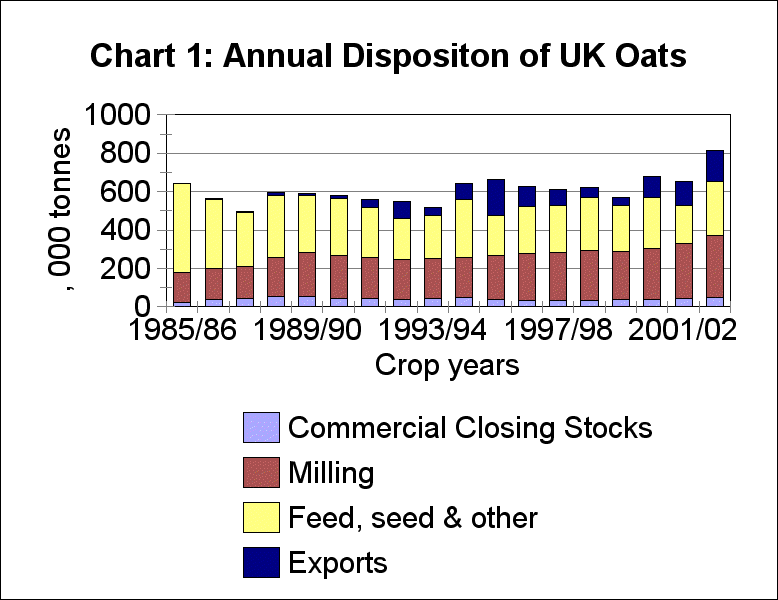
Source: HGCA/DEFRA
continued
But it needed an almost 50 percent increase in feed use to clear supplies. And to achieve this oats prices appear to have been discounted relative to other feed grains.
This year, as Canada has harvested a more normal oats crop, Scandinavian oats exports to the US are likely to return to more normal levels. As both Sweden and Finland have harvested crops only slightly smaller crops than those of 2002, EU trade of Scandinavian oats is likely to increase.
While the UK oats area declined slightly from last year, it is, in an historic perspective, a large area. And even though yields are also expected to be down slightly from last year, UK output in excess of 700,00 tonnes is likely to be the largest, last year's crop excepted, in 25 years,. This means that another good year for exports and feed use will be necessary, even if domestic and industrial use continues its long term growth.
In view of generally disappointing EU feed grain and forage crops and the virtual absence of supplies from Black Sea ports, prospects for EU oats trade are more favourable than last year even though there will be larger supplies of oats from Scandinavia. But as last year oats prices are likely to have to reflect their feed value relative to other feed grains. But as feed wheat prices have improved from a year ago so oats prices are higher.
David Walker
phone: 01603 705153
top of page